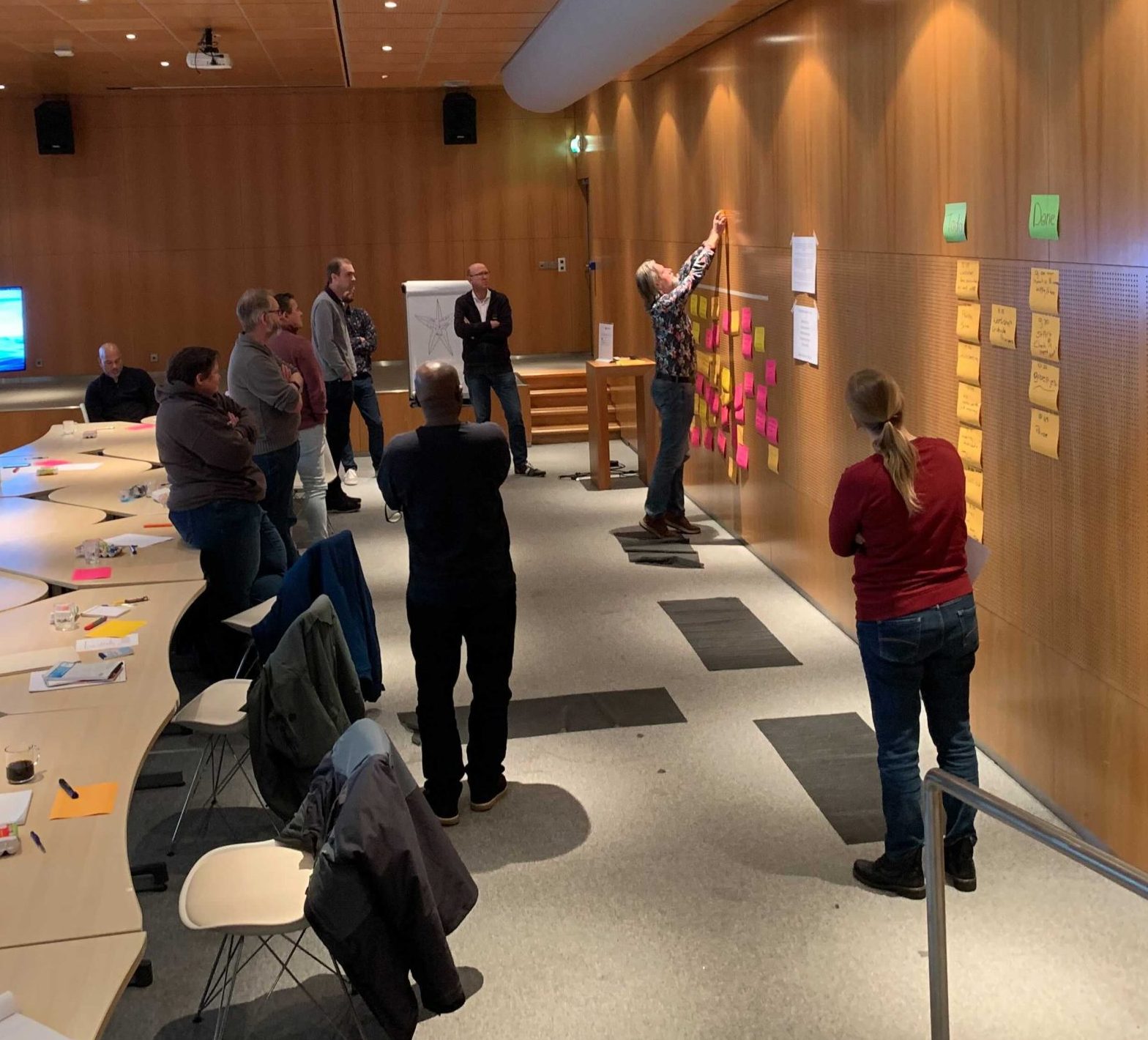
Uncover unspoken assumptions about decision making and increase the autonomy of the team.
Autonomy Poker is a powerful and playful method to create the clarity that teams need to work more efficiently, with more ownership and more fun. By deciding together who can take which decisions, you prevent friction and build a team culture of trust and cooperation.
What is Autonomy Poker?
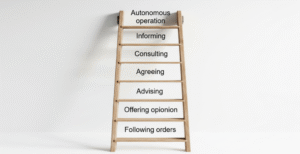
A brief summary for those that know Planning Poker; Autonomy Poker is played in the same way. It’s based on the 7 levels of the ‘Ladder of Autonomy’. Instead of pokering with Fibonacci numers to determine the complexity of a task, you poker with 7 levels of autonomy for a specific decision.
The result? A clear, shared understanding and a clear framework for decision-making.
Who is it meant for?
This game is meant for anyone who wants to increase the level of self-organising of their team. Whether you are a team member, Scrum Master, team coach or manager, you can be the one to introduce this game. The manual is more for guidance, you are welcome to change the method to the specific needs of your team.
How to play Autonomy Poker?
This simple variant is ideal to start with right away.
Step 1: PreparationInvite your team and the manager (or whoever can decide on the level of autonomy) to a session. Make sure that all participants have a full set of Autonomy Poker cards (all 7 levels).
Step 2: Choose the subjectPick the subject or decision that you want to create clarity on. This can vary from ‘The Sprint Planning’ to ‘Hiring a new team member’.
Step 3: Reflection & votingEach team member reflects individually about which autonomy level is most suitable for this decision. They keep their chose card hidden in their hand.
Step 4: Revealing & discussionWhen everyone has picked a card, all the cards are revealed at the same time. This often leads to surprising insights! The people with the highest and lowest score are the first to explain why they made this choice. This stimulates open discussion.
Step 5: Repeat until concensusAre there big differences in the scores? In that case you discuss the differences and the underlying assumptions. Repeat the voting process until consensus has been reached.
Step 6: Document the decisionAs soon as consensus has been reached, it is important to document the result. This guarantees that everyone will keep the agreement and that clarity is maintained.
The Ladder of Autonomy
A brief overview of the 7 levels:
- Management 3.0 Delegation Poker & Delegation Board – Jurgen Appelo
- Turn the Ship Around & Intend-Based Leadership – David Marquet
- Praktisch op weg naar Teamresultaat – Connective Partners – Remi-Armand Collaris