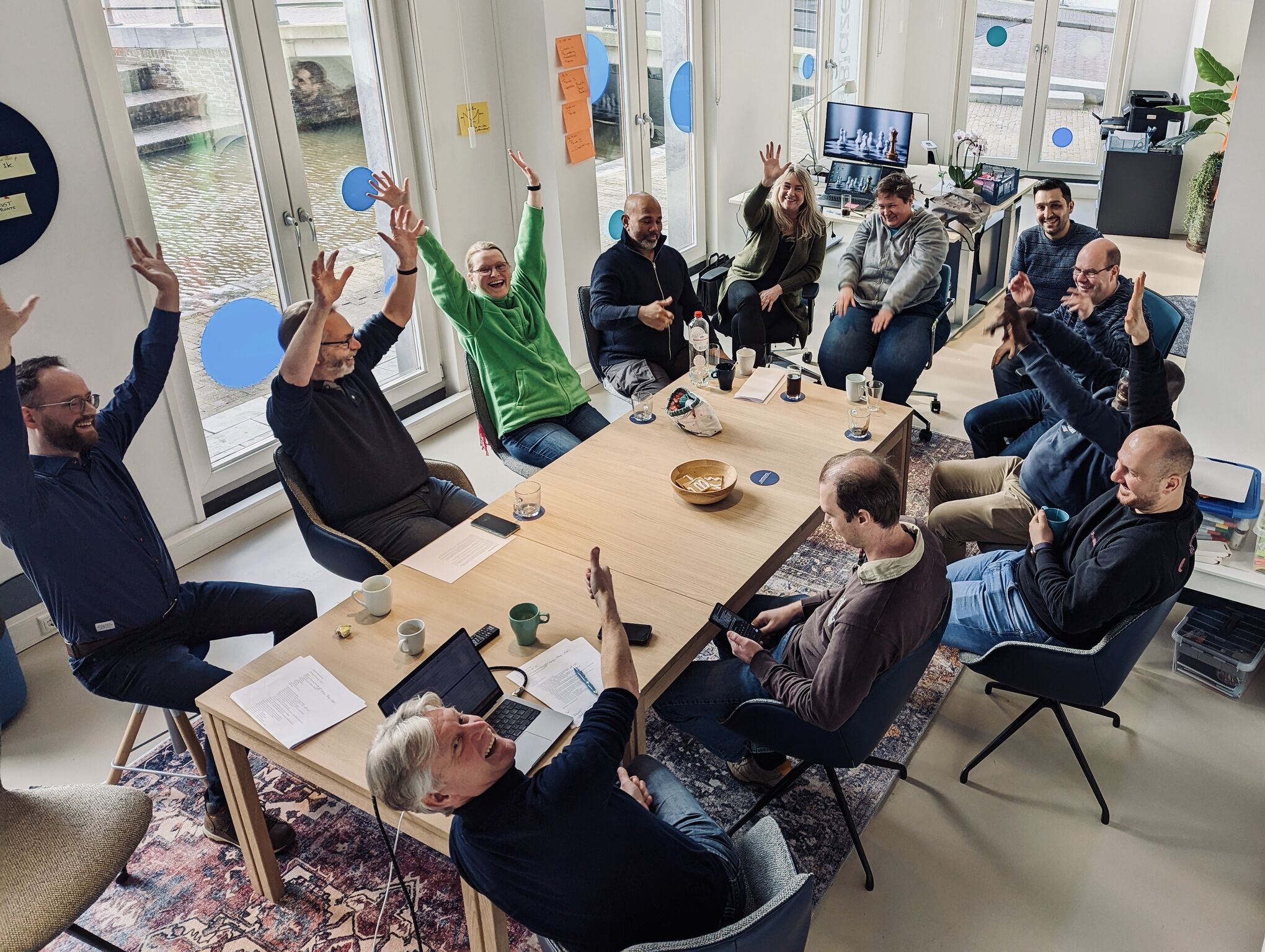
Picture your last retrospective. Sticky notes in three predictable colors. The same three people talking. Someone mutters “same as last sprint” and everyone nods, half-checked-out. Sound familiar?
Now picture the same team, twenty minutes later, arguing — genuinely arguing — over how to divide a fake budget in a simulation exercise, because the exercise forced them to feel the tradeoff between speed and quality instead of just talking about it in the abstract. That’s the difference a serious game makes. And if you’re a Scrum Master or agile coach who’s run out of ways to make “inspect and adapt” feel fresh, it’s worth understanding why.
What “serious games” actually means here
The term sounds like an oxymoron, but it’s simple: a serious game is a game-like activity designed with a real learning or behavioral outcome in mind, not just entertainment. Think Lego Serious Play, planning poker (yes, that counts), the Ball Point Game, Kanban Pizza Game, or a simple prisoner’s-dilemma-style exercise to surface trust issues on a team.
The “game” part isn’t just for fun. It’s a good way to start discussions on delicate subjects. Games work because they:
- Lower the stakes of being wrong, so people experiment more freely than they would in a real sprint
- Compress feedback loops — you can run five iterations of a game in a hour
- Make abstract systems tangible, so a team feels what a bottleneck does to flow instead of just hearing about it
- Bypass the usual politics, because nobody’s defending their actual JIRA ticket
Where they earn their place in agile work
Serious games aren’t a gimmick to bolt onto a boring meeting. They’re most useful at specific pressure points:
Teaching flow and WIP limits. The Kanban Pizza Game or Getkanban simulate a production system under load. Teams that intellectually “know” that limiting work in progress helps throughput often only believe it after watching their own simulated pizza orders pile up when they didn’t limit WIP.
Surfacing team dynamics you can’t name directly. Trust, psychological safety, and hidden conflict rarely show up cleanly in a facilitated conversation — people self-censor. A well-designed game creates situations where those dynamics play out in miniature, and you can talk about what happened in the game rather than accusing anyone directly.
Onboarding to agile concepts. New teams — or teams new to Scrum — often nod along to explanations of sprint planning or estimation without really grasping why it matters. The Ball Point Game, where teams pass a ball around and iteratively improve their process, turns “continuous improvement” from a slogan into something they did with their own hands.
Breaking retrospective fatigue. If your retros have gone stale, a game-based format (even something as simple as a “sailboat” or “starfish” retro with a twist) can reset the energy without changing the underlying goal of the event.
What makes a serious game actually work — not just fun
The failure mode with serious games is treating them as an icebreaker: fun for ten minutes, forgotten by lunch. To avoid that, a few things matter more than the game mechanics themselves:
- Start with the learning objective, not the game. Don’t pick a game because it looks cool on YouTube. Ask what you want the team to understand or change, then find (or design) a game that creates that experience.
- Debrief harder than you play. The game itself is just data generation. The real learning happens in the debrief, when you connect what happened in the simulation back to what happens in the team’s real work. Budget at least as much time for debrief as for play — more, if the group is quiet by nature.
- Match the metaphor to the team’s reality. A pizza-shop simulation lands differently for a hardware team than a services team. If the metaphor doesn’t map, the insight won’t transfer.
- Watch for the team that “gets it” fastest — and the one that resists. Both are useful signals. Resistance to a game’s rules often mirrors resistance to a process change you’ve been trying to introduce for weeks.
A word of caution
Serious games can also become a crutch. If every retro turns into a game, teams may start performing engagement rather than actually reflecting — and some team members (introverts, people uncomfortable with performative exercises) can feel more excluded by games than by a straightforward conversation. Read the room. A game is a tool for a specific job, not a personality you adopt as a facilitator.
Where to start
If you’ve never run one, start small: the Ball Point Game takes 15 to 45 minutes and needs almost no setup, and it reliably produces an “aha” about iterative improvement that a slide deck never will. From there, let the team’s issues— flow problems, trust problems, stale ceremonies — tell you which game to reach for next.
The goal was never to make agile fun for its own sake. It’s that some lessons about complex, interdependent systems are almost impossible to explain your way into — and much easier to feel your way into, one round at a time.
Questions?
Do you have any questions about serieus games or do you want to organize a serieus game for your team or organisation but hesitate to facilitate it yourself?
Please contact us and we are happy to help you.